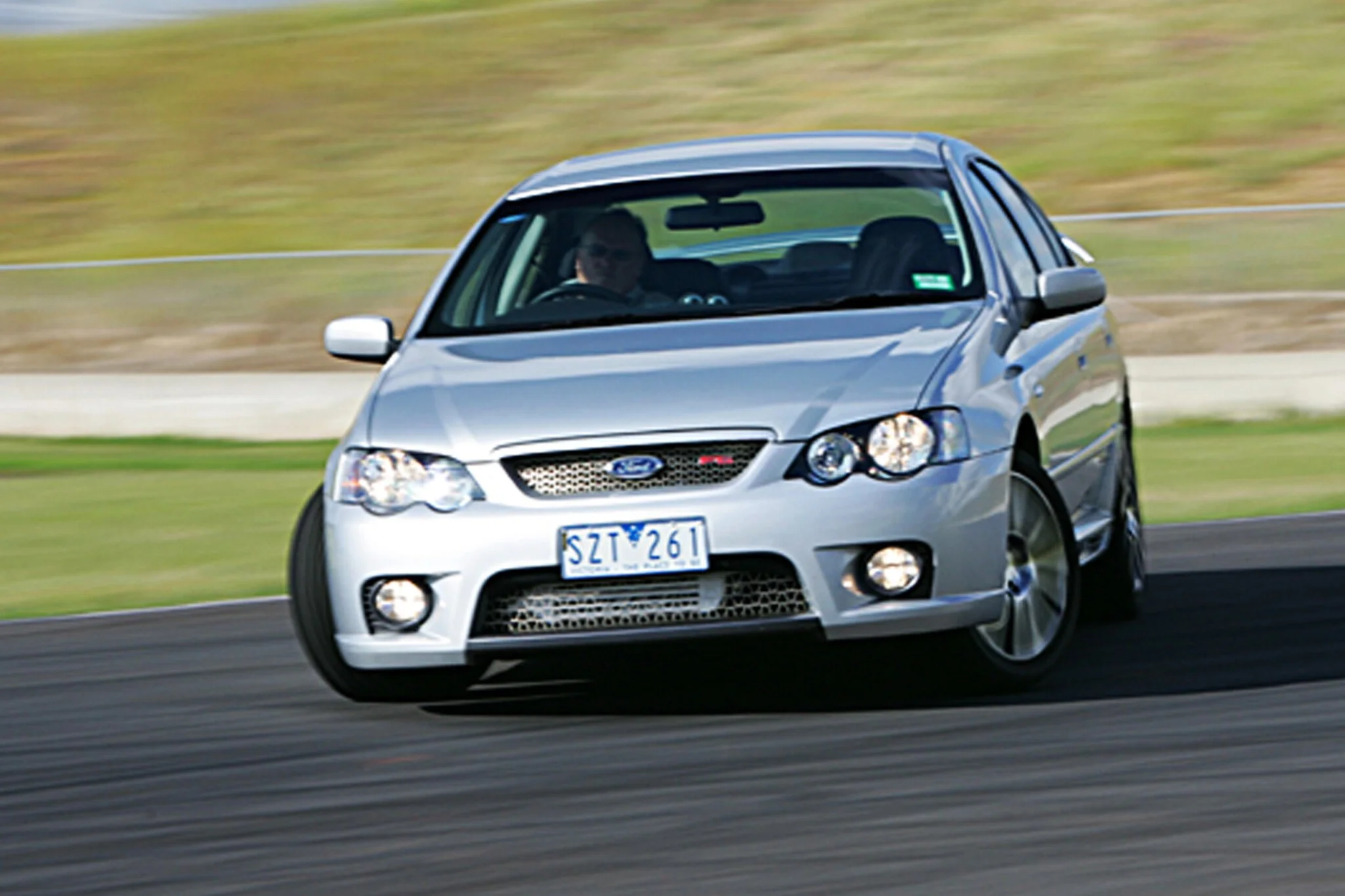
Everything wrong with the Ford Barra I6
The Ford Barra DOHC I6 engine platform is globally recognised for its smooth-running, popularity, and ability to handle remarkable power outputs. However, it is a production engine from one small wing of a global manufacturer and that means it isn’t perfect.
These engines have been fiercely reliable when left stock standard, though power-chasers find the stock valve springs chronically weak and the OEM fuel system on its limit almost at factory power levels. There are a few gotchas that can catch out even stock Barra engines, which people wanting to swap them into other cars need to understand.

The most severe and common critical failure in high-performance Barra engines relates directly to the material composition and design of the stock oil pump gears. The factory oil pump gears are manufactured from a sintered powdered metal alloy. While cost-effective and suitable for stock applications, this material possesses inferior shear and tensile strength compared to billet steel and, when the engine is subjected to high RPM (combined with the torsional and axial harmonic vibration inherent in long inline-six crankshafts), the pump gears are highly susceptible to fatigue failure and fracturing.
This can leads to a catastrophic loss of oil pressure. Thankfully, aftermarket billet gears are easily sourced and mitigate this problem instantly.

The single-coil valve springs utilised in the DOHC head design have an insufficient spring rate to maintain valve sealing under high RPM and high boost pressures. Simply put the springs can’t control the valve when they’re boosted up, or revved hard, and compression can leak when the valve is meant to be shut and the chamber sealed.
At its worst valve float risks pistons and valves colliding, leading to bent valves, cylinder head damage, and dead pistons. Upgrading to a stiffer dual-spring or beehive-style spring kit is essential to maintain kinetic control of the valvetrain under forced induction.
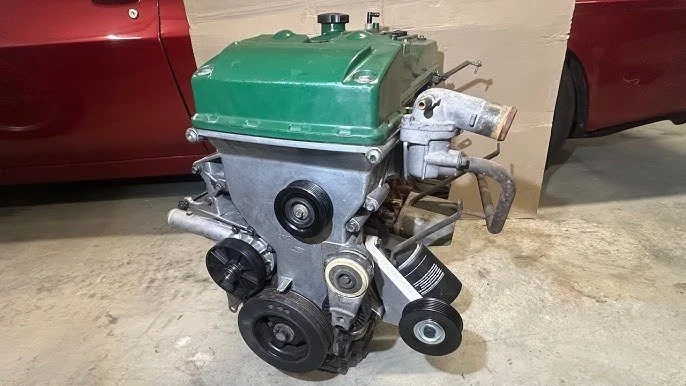
Staying in the head, FG-on engines have demonstrated insufficient case hardening or inconsistency in the ferritic nitrocarburizing process used on the camshafts, resulting in delamination and cylinder head destruction. Worst case scenario for this involves contamination of the oil system with debris, leading to a full engine rebuild.
The stock cylinder head bolts provide sufficient clamping load for factory boost levels. However, once boost pressure is significantly increased (over 20 psi on the typical 4.0L), the stock bolts may no longer provide the necessary axial pre-load to prevent deck separation. High-boost applications require an immediate upgrade to ARP or similar high-tensile strength head studs to ensure consistent and adequate clamping force.
The dedicated LPG (EcoLPi) variants of the Barra platform introduce a separate metallurgical vulnerability related to the cylinder head's valve seats. Due to the high stoichiometry of liquefied petroleum gas and the lack of lubricating additives (like lead substitutes), the higher combustion temperatures and drier environment cause accelerated exhaust valve seat recession.
This phenomenon involves the thermal fatigue and mechanical pounding of the valve on the seat, eroding the softer seat material in the aluminum head over time. This loss of material necessitates frequent valve lash adjustments and eventually requires specialised hardened valve seat inserts to restore head integrity.
While the cast-iron block is immensely strong, the internal components impose strict limits on the maximum sustainable power and torque you can hold in a Barra.
Despite the iron block's inherent strength, certain early production castings exhibit inconsistencies, particularly concerning core shift during the sand casting process. This can result in localised variations in cylinder wall thickness and gallery integrity.
While generally robust, under extreme competition-level boost and cylinder pressure (beyond 500kW), these thinner, non-uniform sections can become weak points, potentially leading to bore distortion or even minor cracking when the block is subjected to rigorous main cap stud pre-load (torque). Precision ultrasonic thickness testing is often required for blocks intended for maximum performance builds, while those chasing over four-digit power are moving to aftermarket iron and billet engine blocks.
The connecting rods in the later model FG-series Barras are constructed from powdered metal. While an improvement over previous casting methods, these rods have a lower Ultimate Tensile Strength, meaning they’ll fatigue under increased cylinder pressure (boost) and RPM strain compared to forged steel items. When pushed past 400rwkW NA rods are prone to bending or fracturing near the pin or big end bearing journal. This catastrophic structural failure is typically induced by detonation or exceeding the rod's load capacity, resulting in total engine loss.
The factory hypereutectic aluminum pistons, similar to other mass-produced turbocharged platforms, are vulnerable to thermal shock and pre-ignition (detonation). Detonation causes rapid, localised pressure spikes that exceed the yield strength of the piston material, leading to a fracture of the top ring-land.
The timing system, particularly in high-mileage or poorly maintained engines, exhibits specific wear characteristics. The Variable Valve Timing (VVT) system uses hydraulic phasers on the camshafts, which are sensitive to oil quality and pressure.
Wear in the internal locking pins or oil galleries of the phasers can lead to "Barra rattle," which is typically observed as a characteristic knocking noise during start-up or low-speed operation. This indicates internal play and a loss of phase control, potentially requiring replacement of the phasers and inspection of the timing chain guides and tensioner for wear.