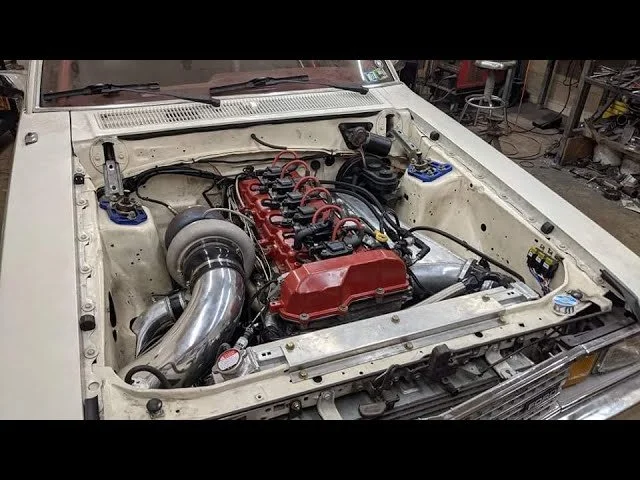
Budget Build: the anti-Barra 500hp Atlas 4.2L I6
The GM Vortec 4200 (LL8) is one of the last great stock bottom-end (SBE) heroes. Its forged-steel crankshaft and robust aluminum block allow it to handle significantly more power than its factory 291HP rating. The key to hitting the 500HP target on stock internals is two-fold: meticulous knock prevention and maximum cooling.
The LL8 has a high stock compression ratio of 10.0:1, which is excellent for efficiency but problematic for high boost on pump gasoline. E85's high octane rating allows the tuner to run far more aggressive ignition timing and higher boost pressures without risking detonation, which is the leading cause of stock piston or connecting rod failure.
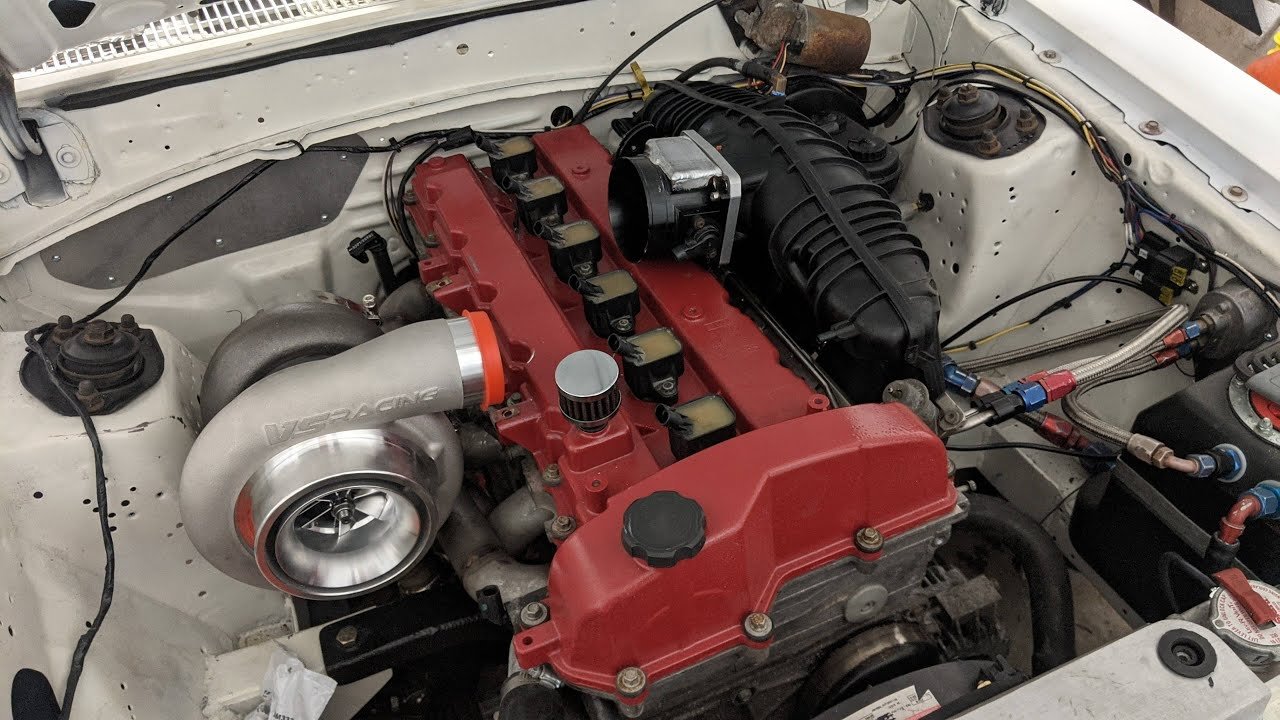
A clean, healthy LL8 running E85 is the minimum safety requirement for this 500HP target on stock internals, and for it to be perfectly reliable while being driven hard at this power level.
Before introducing boost, the engine must be in perfect mechanical health. It’s a capital idea to verify all cylinders are within 5psi compression of each other, while upgrading the head studs is a ground-zero idea.
The factory head bolts are torque-to-yield (TTY) and are not designed for repeated high cylinder pressures. Replace them with ARP Head Studs (typically 150-300). This ensures the head stays clamped to the block under 20psi of boost.
Replace the timing chain, guides, and hydraulic tensioner. This is not a "budget" step, but it is non-negotiable for reliability. Also install new, one-step colder spark plugs (e.g., NGK LFR 7 AIX) gapped tightly (<0.028inches), and replace the factory coil packs for reliable spark under pressure.
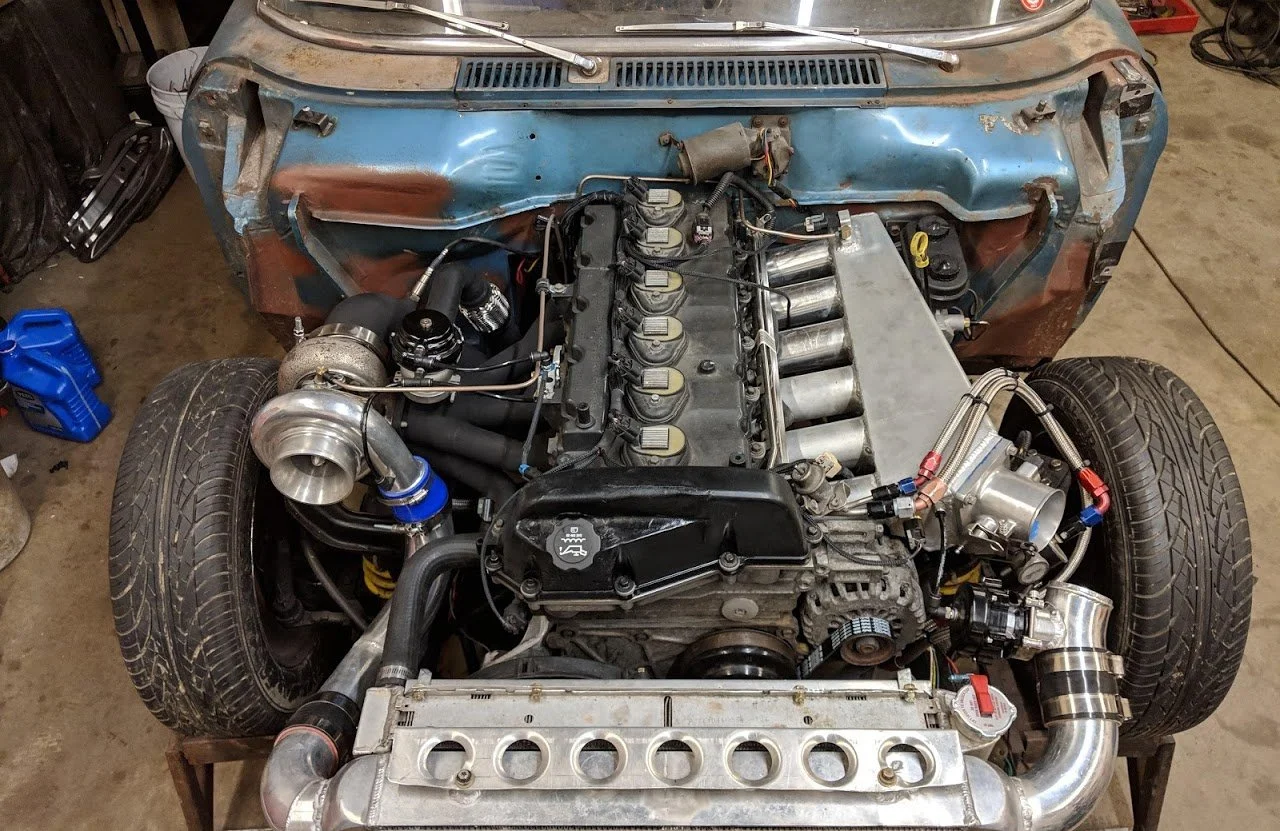
The 500HP target is reached by moving a large volume of air and compensating with fuel delivery. A Precision 6266 Gen2 turbo or similar T4-frame turbo that can flow 60-65lb/min of air (like a G35-900 Garrett) will keep up with the large capacity, DOHC engine’s voracious appetite for air.
Using a modified exhaust manifold, flipped over, or a cheap aftermarket steam-pipe log manifold, will keep costs down. Avoid cheap tube manifolds as these often crack. Aim for a 44mm wastegate to keep precise control of boost levels - while the Atlas is donkey strong it’s not perfect and it was never designed for the cylinder pressures a turbo will generate.
Adding modern 1000cc injectors isn’t just a safety concern but mandatory as you will need 30% more headroom with E85 compared to pump fuel. With this in mind an E85-compatible fuel pump capable of pumping at least 450 litres per-hour is base level for a 500hp combo.
A large, efficient intercooler will be required, capable of holding target boost of between 18-22psi from the turbo, and this will park you firmly in the 500rwhp park.
They say power is nothing without control so you’ll have to save your pennies for an ECU. The factory PCM is complex and difficult to tune for E85 and high boost. A standalone ECU (like a Haltech) offers far greater control over fuel, timing, and boost curves, which is highly recommended for SBE builds. If using the stock PCM, an HP Tuners solution is required, and a dedicated flex-fuel sensor must be integrated.
Big cubes needs big pipes to feed it, so a 4-inch turbo inlet pipe and air filter are needed to prevent turbo cavitation, while a full 3.5inch dump pipe and exhaust system will be required to evacuate exhaust gases efficiently. Any stock bottom-end combo will need a wideband oxygen sensor and gauge mounted in the dump pipe for the driver to monitor air:fuel ratio, ensuring the engine is not running dangerously lean.
500hp will quickly overwhelm the factory 4L60E transmission so swapping to a heavy-duty 4L80E or a Tremec T56 or TR6060 manual (using an appropriate Atlas-to-V8 adapter plate) will be key.
The Atlas I6 provides a tremendous amount of SBE potential, but running 500HP is a feat of engineering that requires careful preparation, the correct fuel, and expert tuning.